
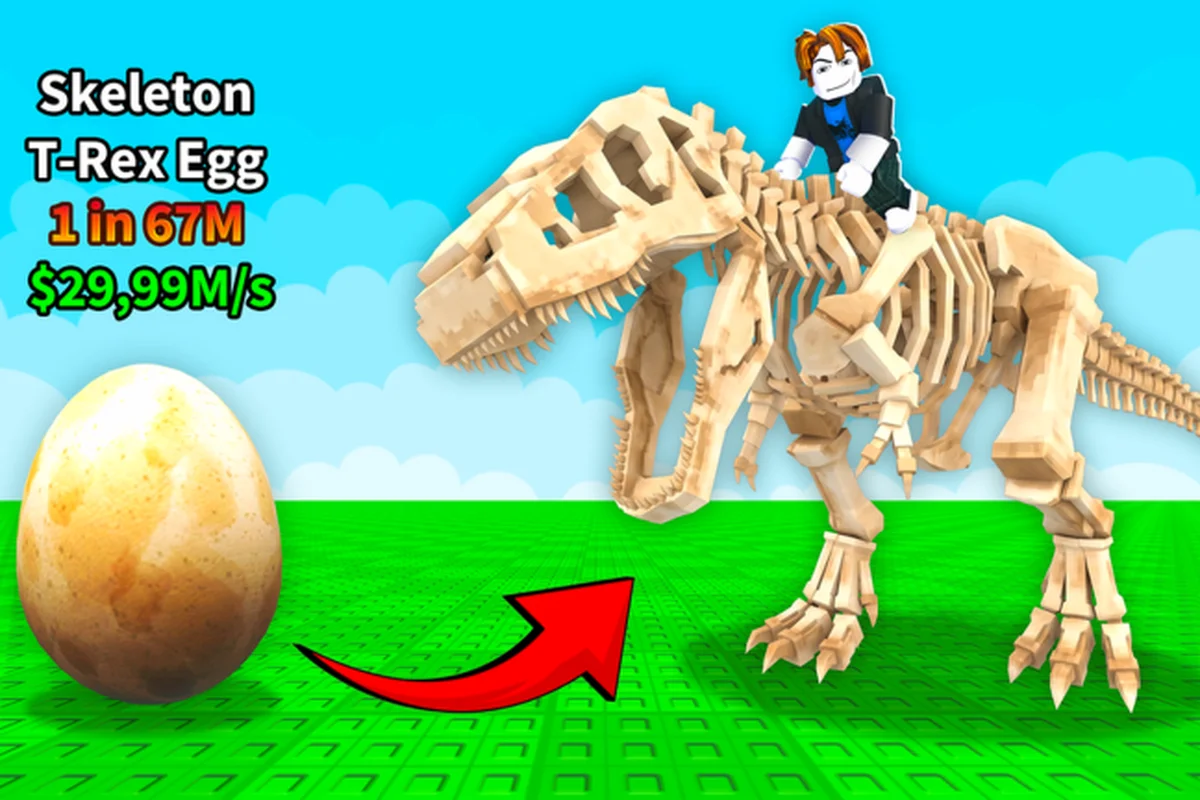
The question of whether Ride a Dino are mutations permanent shapes how you should treat every boost you roll, because a mutation that vanishes after you log out is a very different investment from one that follows your dinosaur forever. The short answer is that a mutation binds to the individual dinosaur you hatch rather than to your account, and it carries that change across sessions, servers, and updates. This article breaks down which progress layers really survive a logout, how speed and rarity move together on a mutated mount, and how to plan a collection that keeps paying off long after the first mutation lands.
The Short Answer on Mutation Permanence in Ride a Dino
Every player who mutates a dinosaur eventually asks the same thing — do those boosts actually stick around after you close the game, switch servers, or come back the next day. The straightforward answer for Ride a Dino is that mutations are bound to the dinosaur you hatch, not to your account, and that dinosaur carries its stat changes into every new session. There is no published reset timer, no daily decay, and no menu option that strips a mutation once it has been applied, so the boost you see on a freshly mutated dino is the boost you keep.
That single mechanic is the foundation of every long-term mutation strategy in the game. Because the speed and rarity improvements move with the dinosaur itself, your collection quietly grows more powerful with every successful mutation, and a dino you hatched weeks ago is still running the same modifiers today. The official Roblox listing for Ride a Dino describes the loop as discover, hatch, ride, mutate, and collect, and the mutate step is the one that turns a temporary mount into a permanent upgrade to your stable. As of 2026-10-18 the game has not published any rarity tier names, mutation names, or numeric multipliers, so the answer below describes the system as it actually behaves rather than inventing labels that the developer has never released.
Players who want the deeper mechanics behind rolling, rerolling, and forced mutations can read the broader Ride a Dino mutation guide, which covers the action itself in full. This article focuses on what survives a session boundary and how to plan a collection that keeps paying off long after the first mutation lands.
How Mutations Attach to a Dinosaur in Ride a Dino
The Dinosaur Is the Save File
The clearest way to think about whether Ride a Dino mutations are permanent is to treat each dinosaur as its own little save file. The egg you find, the dinosaur that hatches out of it, and every mutation you trigger on that creature all live on the same object. When you leave a server, that object goes with you into your collection, and the next time you pull it out of the stable it still carries the same speed, the same rarity, and the same mutation state you left it in. The collection is the persistence layer, and the dinosaur is what is being persisted.
This is why the official description tells you to "collect rare dinos to build out your collection" — collection is the only system that survives, so every improvement has to be applied to a creature you intend to keep. A dino you mutate but never store is a dino whose mutation evaporates the moment that session ends, because the game has no reason to remember a creature that was never filed away. The mutation itself does not decay; it simply has nothing to anchor to once the mount is gone.
Speed, Rarity, and the Mutation Boost
Every mutation in Ride a Dino pushes a dinosaur along two axes at once: speed and rarity. The official page says mutations boost speed "even more" on top of the speed a dino already has from hatching, and rarity is the secondary effect that gates access to harder-to-find eggs. Both axes are stored on the dinosaur, and both follow it into the next session, which is the part most players care about when they ask whether a mutation actually counts.
Below is a practical comparison of the three persistence layers the game actually exposes, so you can see at a glance which parts of your progress survive a logout.
| Layer | Survives a session? | Survives a server change? | Survives a code update? | Notes |
|---|---|---|---|---|
| Base dinosaur (hatch) | Yes | Yes | Yes | The original egg outcome is the floor of every future stat. |
| Mutation boost | Yes | Yes | Yes (in most cases) | Mutations attach to the dinosaur and travel with it. |
| Active egg location | No | No | N/A | Eggs on the map respawn per server, so any unhatched egg resets. |
| Equipped radar (Infinite Radar pass) | Yes | Yes | Yes | The only documented game pass, an always-on egg radar. |
The table makes the permanence picture easy to read. The two rows that hold steady across every boundary are the base dinosaur and its mutation boost, which together explain why mutation is the single highest-value action in the collection loop. Anything tied to a specific server or a specific moment — the egg you can see right now, the position of your character, the random mob of players in the lobby — is not part of the persistence system and is gone the next time you log in.
Comparing Mutations: Stacking, Multipliers, and What Actually Compounds
Why Stacked Mutations Feel Permanent
The mutation comparison most players want to see is between a freshly hatched dinosaur and one that has been mutated several times. Because Ride a Dino does not publish a mutation multiplier table, the cleanest way to describe the gap is to walk through what each additional mutation actually does to the same creature. The first mutation lifts both speed and rarity above the hatch baseline, the second stacks on top of the first, and each further mutation widens that gap. The dino never forgets the earlier mutations, which is the part that makes the stack feel permanent — it is permanent, because the dinosaur itself never gets rewritten from scratch.
This is also the reason the question of how to force a mutation comes up so often. Forcing is really a strategy for stacking the right effect on a creature you already like, rather than a one-time trick that overrides a system. The mutation you force still attaches to the dinosaur, the dinosaur still carries it into the next session, and your next mutation will compound on top of it. A common planning mistake is to treat each mutation as a single dice roll in isolation; in practice the dino is a ledger, and every successful entry is permanent.
| Mutation count on the same dino | Speed vs. hatch baseline | Rarity vs. hatch baseline | What this means for egg access |
|---|---|---|---|
| 0 (just hatched) | Baseline | Baseline | Only the easiest egg spawns are reachable. |
| 1 mutation | Above baseline | Above baseline | New egg spawns on the map become reachable on foot. |
| 2 mutations | Noticeably faster | One tier higher | Mid-tier egg locations start to pay off. |
| 3+ mutations | Dominant | High | The hardest-to-find eggs become the routine target. |
Because the game does not publish numeric speed values or rarity tier names, the table above is a relative scale built from the official description, not a hard multiplier sheet. The official line is that mutations boost speed "even more" and that better rarity unlocks harder-to-find eggs, and the table simply maps that direction onto a typical progression. What the table does nail down is the compounding shape of the curve, which is the practical reason that mutation stacking is the heart of every long-term strategy.
Mutation Boost vs. Hatch Bonus
It helps to separate two boosts the dinosaur actually receives. The hatch bonus is the speed and rarity the dino starts with, set by whatever egg it came out of. The mutation boost is everything that lands on top of the hatch bonus, one mutation at a time. Both are permanent in the strict sense — neither decays — but they are not interchangeable. The hatch bonus is fixed the moment the egg cracks, while the mutation boost grows every time you choose to mutate that creature.
Players who want the cleanest read on the gap between a lucky hatch and a heavily mutated dino usually compare two dinosaurs side by side: one that has only the hatch bonus, and another of the same starting tier that has been mutated several times. The mutated one wins on speed, wins on rarity, and therefore reaches egg spawns the freshly hatched one cannot even see. The relevant Ride a Dino mutation comparison breaks down how often each tier of mutation actually lands, which is the partner question to whether the boost is worth chasing in the first place.
How to Build a Mutation Strategy That Survives Updates
Pick Anchors Early, Not Late
A long-term mutation strategy in Ride a Dino starts with which dinosaur you treat as your anchor mount. The official loop — find egg, hatch, ride, mutate, collect — only compounds if the dino you choose to stack mutations on is one you actually want to ride, because every mutation you apply to it will follow that creature for the rest of its life in your collection. Players who mutate a low-rarity hatch first and only later realize they want a different base are not punished by the system, but they have spent mutation opportunities on a creature that is now outclassed by the one they actually want to ride.
The practical rule is to identify your anchor dino within the first handful of hatches and start mutating it before you expand sideways. The collection can hold plenty of dinosaurs, but only one creature at a time benefits from the full chain of "ride faster, reach harder eggs, hatch better dinos, mutate the better dinos." Once the anchor is in motion, every additional mutation lifts the floor for the next egg run, which in turn gives you a better candidate for the next anchor if you ever want to switch.
| Strategy step | Action | Why it pays off over time |
|---|---|---|
| 1. Find an anchor hatch | Pick a dino you actually enjoy riding. | All future mutations compound on this base. |
| 2. Mutate early | Apply the first mutation as soon as it lands. | The boost is permanent from the moment it is applied. |
| 3. Reach harder eggs | Use the boosted dino to hit higher-tier egg spawns. | Better eggs feed better future anchor candidates. |
| 4. Stack on the anchor | Keep mutating the same creature while it remains competitive. | Each additional mutation widens the lead. |
| 5. Branch the collection | Hatch new dinos for display or backup, but do not move mutations off the anchor. | The collection grows while the anchor keeps compounding. |
Planning Around Updates
Ride a Dino launched on 2026-09-18 and was most recently updated on 2026-10-12, which is the most recent recorded patch as of 2026-10-18. Updates in a young Roblox title tend to rebalance rarity, retune egg locations, and occasionally rework the mutation system itself. The good news for permanence is that mutations on already-hatched dinosaurs tend to survive patches, because the developers have an interest in not invalidating a player's collection, but the only thing the game has publicly committed to is the description on the official Roblox page. The official Ride a Dino Roblox listing is the most reliable source for what the loop looks like on any given day, and it is the page to revisit if a patch shifts the names, locations, or effects of any system.
Players who want a more tactical read on when to spend a mutation versus when to hold can pair this article with the Ride a Dino mutation priority breakdown, which covers which mutations tend to matter most for egg reach and which are more cosmetic in nature. Combining the permanence answer here with the priority answer there is usually enough to plan a week or two of play without overthinking every roll.
Mutation Boost in Practice: Three Scenarios
Scenario 1 — Single Mutation on a Mid-Tier Hatch
A player hatches a mid-rarity dinosaur, rides it around for a while, and triggers a single successful mutation. From that moment, the dino's speed and rarity are both above where it started, and that lift is permanent because the dino itself is the persistent object. The next time the player logs in, the same creature is in the collection with the same boost, and the player can immediately use it to reach an egg spawn they could not reach before the mutation. The mutation boost in this scenario is small but real, and it is the smallest possible unit of long-term progress in Ride a Dino.
Scenario 2 — Stacked Mutations on an Anchor Dino
A more committed player commits a single anchor dino to the mutation system and pushes it through three or more successful mutations. Each mutation stacks on the previous one, the dino's speed and rarity climb together, and the creature becomes the player's main mount for reaching the harder-to-find egg spawns on the map. Because every boost is attached to the dinosaur, the player can take breaks, switch servers, and come back to find their anchor exactly where they left it. The mutation strategy here is essentially to treat one slot in the collection as the compounding engine, and let the rest of the collection fill in around it.
Scenario 3 — Mutation Right Before a Patch
A third case worth thinking through is what happens when a player mutates a dino shortly before an update lands. Historically, mutation state on already-hatched dinosaurs has not been wiped by balance changes, but Ride a Dino is still a young game and the developer has not published a written guarantee. The conservative move in this scenario is to avoid mutating a creature you cannot afford to lose, and to confirm the system is unchanged after a patch by re-reading the official page. Players who want a deeper read on whether to mutate at all during uncertain periods can check the should-you-mutate breakdown, which covers the trade-off between acting now and waiting for a clearer patch note.
Frequently Asked Questions
Are Ride a Dino mutations permanent between sessions?
Yes. The mutation boost is attached to the dinosaur itself, and the dinosaur is what gets stored in your collection. When you close the game, switch servers, or come back the next day, the same creature is still in the stable with the same speed and rarity lift it had when you last rode it. There is no published decay timer or reset for mutations as of 2026-10-18.
Do mutations stack on top of each other in Ride a Dino?
They do, and the stack is permanent. Each successful mutation raises the dinosaur's speed and rarity above where it was, and the next mutation compounds on top of the previous one. Because the whole stack lives on the same creature, a heavily mutated dino keeps the full history of every boost it has ever received.
Can I lose a mutation if the game updates?
The game has not published a written guarantee about patch behavior, but updates to Ride a Dino have not wiped mutations on already-hatched dinosaurs in the patches recorded so far. The safest habit is to re-read the official Roblox listing after any major update to confirm the mutation system still works the way it did before.
Is there a way to force a specific mutation in Ride a Dino?
There is no documented method to force a named mutation, and the game has not published a list of mutation names to target. The closest thing to a forcing strategy is to keep rerolling on a high-rarity anchor until the boost you want lands, and to remember that whichever mutation does land is permanent on that dinosaur.
How does the Infinite Radar game pass relate to mutations?
Infinite Radar is the only documented game pass in Ride a Dino, and it gives you a permanent radar that always points to the nearest egg. It does not change how mutations work, but it does make it easier to find new eggs for the dinosaurs you intend to mutate, which indirectly speeds up the long-term mutation strategy described below.