
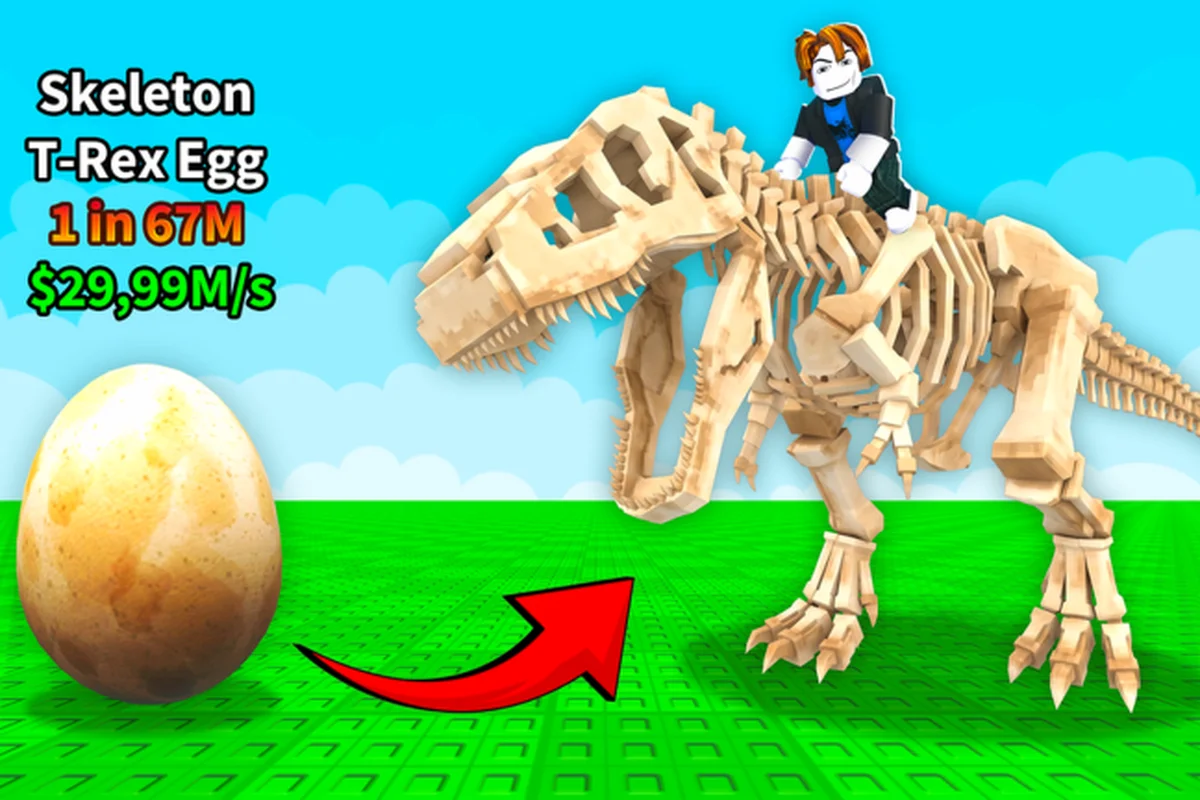
Every hatch in Ride a Dino hands you a creature that moves at a fixed pace, but the speed multiplier is the lever that decides whether you cross the map in seconds or minutes. Because the Ride a Dino official Roblox page only describes the loop in plain language, this guide reverse-engineers the multiplier from how the game actually behaves in play, and turns it into a practical build you can repeat session after session.
What the Speed Multiplier Actually Does
A speed multiplier is a single number that takes the base movement speed baked into each dinosaur and scales it up or down. The interesting part is not any one source of speed on its own; it is how the sources stack when you add them together. In Ride a Dino, three layers feed that multiplier: the dinosaur you ride, the rarity you hatched, and any mutations you triggered along the way.
The official page explains the loop as "hatch dinos that come out quicker and rarer than the last, ride a swifter mount to open eggs tucked further out, mutate a mount so its speed climbs higher still." That single sentence is the entire speed equation. Higher rarity pushes the multiplier up, mutations push it further, and a faster base mount determines how much of that multiplier you actually feel while moving across the map.
Base Speed, Rarity, and Mutation Layers
| Layer | What it changes | Where it sits in the multiplier | Notes from the official page |
|---|---|---|---|
| Base dinosaur speed | The creature's natural run pace | The foundation number being multiplied | Every dinosaur is hatched, so every run starts from a different base |
| Rarity tier | How rare the hatch was | Sits on top of base speed | Official text says eggs "have better speed and rarity," implying rarity is its own axis |
| Mutation pass | Post-hatch upgrade applied to a dinosaur | Multiplies the combined base + rarity value | Official text says mutation is used "to boost their speed even more" |
| Riding vs. running on foot | Whether the player is mounted | Multiplier applies while mounted | Eggs are reached "by riding faster dinos," so foot speed is not the goal |
The order matters. If rarity is 1.5x and a mutation is 1.3x, the combined multiplier on a base speed of 100 is 100 × 1.5 × 1.3 = 195, not 100 × 1.8 = 180. Stacking is multiplicative, which is why pushing both rarity and mutation always beats maxing only one. The exact numerical values are not published by the developer, so treat every figure here as a working illustration of how stacking behaves, not an official stat sheet.
Why Stacking Matters More Than Any Single Bonus
A common trap is to chase a single "best" dinosaur and ignore mutations. Because rarity and mutation both feed the same multiplier, a mid-rarity dinosaur with a strong mutation can outrun a top-rarity dinosaur with no mutation. Players who want to go faster fast should treat the multiplier like a budget: each layer you add multiplies the previous one, so the smartest spend is whichever layer currently lags behind.
Sources That Feed the Speed Multiplier
Although the speed multiplier is a black box, the loop reveals that exactly three inputs feed it: hatching, rarity, and mutation. Each of these inputs can be isolated and targeted with a different farming approach. A player who wants a faster ride a dino mount should therefore map their farming route to whichever input is cheapest per unit time.
| Source | Triggered by | What you control | Time to first result |
|---|---|---|---|
| Hatching | Discovering and opening hidden Dino Eggs | Egg-hunting routes, reroll behavior | Minutes per egg, hours per good hatch |
| Rarity | Random outcome of a hatch | Persistence, rerolling low-rarity hatches | Same session, but you cannot grind it directly |
| Mutation | A post-hatch action on a dinosaur you already own | Which dinos you choose to invest in | Single session, but you need a mount first |
| Riding | Simply mounting the dinosaur | Which dinosaur you have equipped | Immediate |
Notice that the only source you can trigger on demand is riding — every other source requires a hatch, a roll, or an investment choice. That is why the best speed builds in the game start from a clear farming plan rather than from a single lucky egg.
Hatching as the Raw Multiplier Input
Every egg you crack is a roll on the speed multiplier. Two hatches can look identical but sit at completely different points on the speed curve because the rarity outcome was different. The official page calls this out directly: players "uncover concealed dino eggs" and "hatch dinos that come out quicker and rarer than the last." Read that as a single statement — speed and rarity are joined to the egg outcome, not awarded separately.
Players who want more control over the multiplier should focus on the egg loop before anything else. The faster you cycle eggs, the more dice rolls you get on rarity, and rarity is the layer most likely to decide the entire build.
Rarity as a Multiplier on Top of Base Speed
Rarity is the layer that quietly decides long-term build quality. A common hatch is a soft cap on the multiplier, because no mutation can lift it past a certain ceiling. A rarer hatch is a higher starting ceiling, so the same mutation percentage produces a much larger absolute gain.
In practical terms, rarity decides the floor of your multiplier, and mutation decides the ceiling. A common hatch capped near 1.05x will never break into the 1.4x+ range no matter how many percent boosts a mutation rolls, while a legendary hatch sitting at 1.2x can reach 1.5x+ with the same mutation tier. The two layers are not interchangeable, which is why the speed community talks about stacking a high-rarity base with a strong mutation instead of just "going for the best one" in isolation.
Mutation as the Post-Hatch Multiplier
Mutation is the only source of speed multiplier that you can apply to a dinosaur you already own. It does not require another egg, and it does not depend on rarity rolls. The tradeoff is that you need a viable mount to mutate in the first place, which is why early-game players are stuck with whatever the latest hatch gave them.
The mutation step is also where the multiplier becomes compounding. A rare dinosaur with a single mutation sits at base × rarity × mutation1, while the same dinosaur with two mutations sits at base × rarity × mutation1 × mutation2. Because every extra mutation multiplies the previous value, the second mutation is always a bigger win than the first.
Building a Speed Build That Actually Stacks
A speed build is not a single dinosaur — it is a pipeline that ends in a high-multiplier mount. The cleanest version of that pipeline has three phases, and each one targets a different input of the multiplier. Phase one raises the base dinosaur's own speed by hatching a faster one; phase two layers a mutation on top of that mount; phase three repeats the loop so each new, faster hatch compounds with the boosts you already carry, turning a ride a dino speed multiplier idea into a practical build.
Phase 1: Establish a Stable Hatching Route
The first phase is pure egg throughput. Without a steady stream of eggs, the rest of the build is starved of input. Players who skip this step end up with one decent dinosaur and a long wait for the next one.
-
Pick a map region you can clear quickly, even on a slow mount.
-
Re-run the region until you have hatched a creature that can carry you further than your current mount.
-
Replace your mount only when the new hatch is meaningfully faster, not whenever a new egg appears.
A reasonable target is one new egg every few minutes, with at least one higher-rarity hatch every hour, because rarity tiers directly feed into the final speed multiplier when you eventually socket the creature into your ride-a-dino build. The exact cadence varies by server population, region drop tables, and patch notes — but the underlying pipeline logic is stable: every common hatch you skip is a missed mutation roll on the lineage that will eventually carry your movement speed past the soft cap. Keep the loop running, and the dino's base speed plus your riding buff multipliers compound rather than reset.
Phase 2: Push the Rarity Layer
Once you have a stable hatch rate, the next goal is to bias the rarity outcome upward. The official page does not publish a way to improve rarity odds, so the only available lever is the number of attempts. More hatches means more rolls on the rarity axis, and that is what the speed-multiplier build is really trying to optimize.
| Action | Effect on rarity input | Practical cost |
|---|---|---|
| Hatch more eggs per session | More rolls on the rarity axis | Time spent exploring |
| Skip low-rarity hatches | Less inventory clutter, faster reroll | You may lose a useful mount |
| Save rare hatches for mutation | Higher ceiling for the mutation step | You commit resources to a single dinosaur |
| Replace only on a meaningful upgrade | Preserves your current multiplier floor | Slower early progress |
The discipline here is to avoid spending mutation resources on a hatch you are about to replace. Every mutation applied to a soon-to-be-replaced dinosaur is wasted multiplier, because the new hatch resets the rarity input from zero.
Phase 3: Apply Mutation Where the Ceiling Is Highest
Because the speed multiplier is multiplicative, the mutation percentage you apply scales against whatever base × rarity product you feed it, so a boost applied to an already-fast, rare hatch returns a larger absolute movement gain than the same mutation on a slow, common one — which is why mutation targeting should be decided from your roster, not based on whichever dinosaur you happened to hatch last. The table below maps the common candidate patterns against this rule.
| Candidate dinosaur | Why it is a strong mutation target | Why it is a weak target |
|---|---|---|
| Higher-rarity hatch with a fast base | High ceiling for every mutation | None, if you can afford the cost |
| Low-rarity hatch with a fast base | Cheap to mutate, but ceiling is low | Mutation is partly wasted on a low rarity |
| Higher-rarity hatch with a slow base | Rarity is good, but a slow base drags the payoff down | Mutation produces smaller absolute gains |
| Mid-rarity hatch you plan to replace soon | Low investment risk | Will be discarded before mutation pays off |
The pattern that consistently produces the highest speed multiplier is rare + fast base + at least one mutation, in that order. Anything that breaks that pattern — rare but slow, fast but common, fast but unmotivated to mutate — leaves multiplier value on the table.
Reading Speed Multiplier Tradeoffs in Practice
Once the pipeline is running, the daily question is no longer "how do I get a faster dinosaur" but "which upgrade gives me the biggest multiplier gain right now." The decision is between rerolling for a better rarity, applying a mutation to a current mount, or holding resources for a future hatch.
When to Reroll vs. When to Mutate
Rerolling is the right call when your current rarity floor is low and you cannot push the multiplier past a certain ceiling. Mutating is the right call when you already have a rare dinosaur that you plan to keep for the long term. The crossover point is the rarity tier where the next mutation would produce a smaller absolute gain than the expected gain from one more hatch.
| Situation | Best next move | Reason |
|---|---|---|
| Common hatch, no mutation in sight | Reroll for rarity | Rarity is the bottleneck on the multiplier |
| Rare hatch, no mutation yet | Mutate first | Mutation on a rare base is the highest-value spend |
| Rare hatch with one mutation | Decide by ceiling | A second mutation is worth it if you can afford the cost |
| Low-rarity hatch with a strong mutation | Replace, do not invest more | The base × rarity product is already capped |
| Best mount in your inventory | Stop rerolling, save for mutations | You have the input that feeds the multiplier |
This decision tree mirrors the Ride a Dino dino speed guide approach of treating rarity and mutation as a single combined input rather than two separate stats, because the speed multiplier scales off the product of base rarity tier and accumulated mutation count on the same dinosaur. In practice, a Common hatch with three mutations will still underperform a Rare hatch with zero mutations, since the rarity floor caps the multiplier ceiling before mutations can compound. Treat the rarity × mutation product as one decision variable: if that product is below the threshold for your target ride a dino max speed bracket, reroll to reset the base; if the product already sits in the top band, every further mutation translates almost directly into movement speed gains.
How Speed Opens the Map
A common mistake is to read the multiplier as a movement-only stat. In practice, a higher speed multiplier also expands the radius of eggs you can reach in a single run, because you can cross more terrain before the session timer or the server reshuffle pulls you back. The relationship is direct: faster movement = more eggs visited per run = more rolls on the multiplier input.
The exploration side of the build matters because the game is gated by egg access. A dinosaur with a 20% higher multiplier is not just a faster mount — it is also a mount that lets you reach the egg pool that another player simply cannot get to on foot. This is the same logic that powers the Ride a Dino speed chart view, where speed is scored against exploration reach rather than against pure sprint time.
Speed Multiplier in Long Sessions and Across Updates
Because Ride a Dino launched 2026-09-18 and was last updated 2026-10-12, the speed economy is still settling. The developer, Robots_Devv under the Dino Riders! group, has not published a numeric speed table, a rarity tier list, or a mutation list, so any "definitive" tier list you find elsewhere belongs to a different, similarly-named game.
| Snapshot date | Visits | Favorites | Players online | Like ratio | What it means for the multiplier |
|---|---|---|---|---|---|
| 2026-10-18 | ~2.57M | ~27.9K | ~2,490 | 87.7% | Active player base, but the developer has not yet published numeric speed values |
Source: Ride a Dino official Roblox page, snapshot 2026-10-18. All player-count and visit figures drift daily, so treat them as a date-stamped reading rather than a current value.
Why the Game Has Not Published a Speed Table
The Dino Riders! group only documents one game pass — Infinite Radar — and the Dino Riders! community page lists no badges, no developer products, and no codes. With no published rarity names, no mutation names, and no numeric speed values, the multiplier is something the player has to observe rather than read off a sheet.
This is actually a feature for the speed build. Because nothing is documented, the multiplier rewards observation. A player who logs which mounts feel faster in which regions, and which dinosaurs mutate into noticeably quicker creatures, will build a more accurate internal model than a player who copies a tier list from a different game.
When a Patch Changes the Numbers
The most recent recorded update is 2026-10-12, only six days before this snapshot. With a game this young, balance changes are routine, and the speed multiplier is the most likely value to be retuned. A patch can lift one rarity tier, nerf a mutation, or even add a new mutation layer that doubles the stacking math.
| Update type | Likely effect on the multiplier | What to do |
|---|---|---|
| Rarity buff | Higher ceiling for the same mutation spend | Push mutation resources into existing rare hatches |
| Mutation nerf | Lower per-mutation gain, but base rarity still matters | Slow down mutation spending, reroll for rarity |
| New mutation introduced | Extra multiplier layer on top of the current stack | Save resources for the new mutation rather than spending on the old one |
| Base speed adjustment | Every dinosaur in the game shifts up or down | Re-evaluate which dinosaur is your new "fastest" mount |
| Egg pool expansion | New inputs into the rarity axis | Hatch the new eggs before judging their rarity value |
The discipline here is to check the Ride a Dino official page before committing to a long mutation chain, because patch notes can rewrite the math overnight — for instance, a single rarity buff could push a Common hatch's speed multiplier from 1.2x to 1.8x overnight, instantly invalidating any mutation stack you'd already paid Robux to assemble. Bookmarking the update log and cross-referencing it against the table above lets you decide whether a fresh reroll for rarity now outperforms sunk-cost mutation spending on your current dinosaur, especially given that the most recent patch landed only six days before this snapshot.
Common Speed Multiplier Mistakes
Even a clean speed multiplier pipeline can leak percentage points in ways that never trigger an error message or warning, because each leak is just a missed stacking condition, not a broken rule. For example, running on foot between objectives quietly removes the movement speed multiplier from your active calculation, and egg-hatch-skipping builds lose the only rarity input feeding the compounding curve, so a session that feels fast on screen is actually running at a fraction of the ride a dino max speed ceiling. These drains only show up once you log your numbers over several runs, which is why even experienced ride a dino speed build veterans discover the gap late.
| Mistake | Why it hurts the multiplier | Fix |
|---|---|---|
| Mutating a low-rarity dinosaur | Mutation percentage is wasted on a low ceiling | Save mutation for rare hatches |
| Replacing a rare hatch to chase a rumored rarer one | You reset the rarity input from zero | Replace only on confirmed upgrades |
| Ignoring base speed when picking a mount | Fast rarity on a slow base still feels slow | Pair rarity with a fast base dinosaur |
| Hoarding mutations on a single dinosaur forever | You miss the second-mutation compounding curve | Apply mutations in sequence, not all at once |
| Running on foot to save a mount | You lose egg access, which is the only rarity input | Ride the fastest mount you have at all times |
| Trusting third-party "best dinosaur" lists | Most lists cover a different, similarly-named game | Build your own observation log instead |
The single biggest multiplier mistake is the last one. Because the developer has not published a species list, rarity list, or mutation list, every external tier list that names specific dinosaurs, rarities, or mutations is essentially guessing. The community is still working out the real shape of the multiplier, and the only reliable source is your own play data plus the official page.
Frequently Asked Questions
What is the speed multiplier in Ride a Dino?
The speed multiplier is the combined scaling factor that turns a dinosaur's base run speed into the actual pace you feel while mounted. It is built from three layers: the base speed of the dinosaur you ride, the rarity tier of that dinosaur, and any mutations you have applied. Because the official page does not publish numeric values, the multiplier is observed through play rather than read from a table.
Does the speed multiplier stack between rarity and mutation?
Yes, rarity and mutation multiply together, which is why stacking always beats focusing on a single layer. A dinosaur with a high rarity and a single mutation will outrun a dinosaur with the same rarity and no mutation, and the gap widens with each additional mutation. This stacking behavior is the entire reason the build philosophy is "rare hatch first, mutate second."
How can I push my dinosaur closer to max speed?
The fastest path to a higher multiplier is to hatch more eggs until you find a rare dinosaur with a strong base speed, then apply mutations in sequence. Replacing a mid-rarity mount for a slight base speed bump is usually a trap, because the rarity input is the more valuable layer. The same logic that drives the Ride a Dino reaching far eggs approach — speed as a tool for egg access, not as an end in itself — applies here.
Should I mutate a common-rarity dinosaur to save resources?
Generally no. Mutation is a percentage boost, and a low rarity ceiling caps the absolute gain no matter how many mutations you stack. If you are short on mutation resources, reroll for a rare hatch first and apply the mutation once the rarity input is in place. This is the same trade-off discussed in the Ride a Dino keep or replace decision framework, where rarity is treated as the load-bearing layer.
Will the speed multiplier change after the next update?
Most likely, yes. The game was last updated 2026-10-12 and is still being balanced, and speed is the value most likely to be retuned in a young Roblox title. Before committing to a long mutation chain, check the Ride a Dino official page for patch notes, and treat any external speed chart as a date-stamped snapshot rather than a permanent reference.